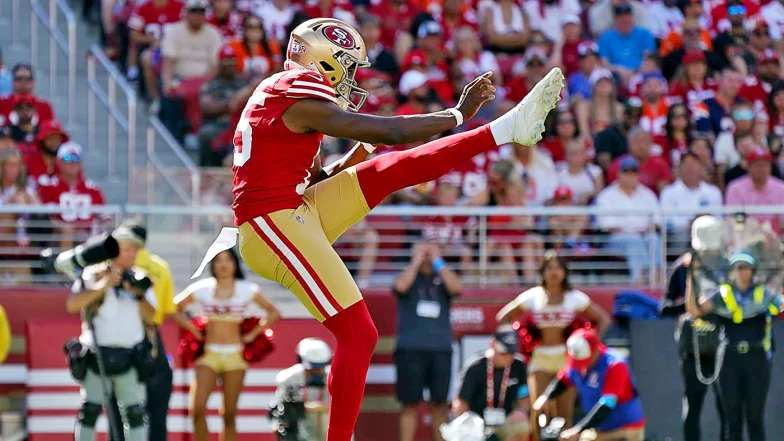
The San Francisco 49ers haven't needed to punt very often this season. When they have, Corliss Waitman has consistently helped them win the field-position battle.
Through five games, Waitman has punted just 16 times, largely because of an offense that has moved the ball effectively. But his limited workload hasn't stopped him from making a difference on special teams.
His 47.3 yards-per-punt average ranks 23rd in the NFL. On the surface, that's an unremarkable number. However, a closer look at his production shows a punter whose value goes beyond just distance.
Opponents have returned his punts for just 38 yards, the fourth-lowest total in the league. That helps give Waitman a net average of 43.4 yards per punt, ranking 11th.
That is a big distinction, as a long punt loses some of its value if the returner brings the ball back upfield. Waitman has limited those opportunities so far, helping San Francisco maintain an advantage in field position.
Flipping the Field When It Matters
Seattle provided a strong example of Waitman's value in the 49ers' 32-29 victory in Week 5. He punted five times, with all five landing inside the 20-yard line, including three inside the 10.
Just before halftime, Waitman pinned the Seahawks at their own 4-yard line. The difficult starting position helped set the stage for a crucial defensive sequence, with Gracen Halton forcing and recovering a fumble for a touchdown.
That punt and the defensive touchdown that followed showed how special teams can influence a game without appearing on the box score. Waitman put Seattle in a difficult position, and the 49ers' defense capitalized.
He was also effective in another important area against Seattle. Despite facing Rashid Shaheed, one of the NFL's most dangerous return threats, the 49ers allowed zero punt-return yards.
That performance fits a bigger trend in Waitman's season. He has recorded just one touchback on 16 punts, while nine have landed inside the 20-yard line. His 56.3% rate of punts inside the 20 reflects an ability to prioritize placement and force opponents to start drives deep in their own territory.
For a defense, those extra yards can matter. Longer fields give opposing offenses more opportunities to make mistakes and require them to sustain a long drive to get near scoring range.
An Underrated Part of the 49ers' Success
Waitman's impact is easy to overlook when the offense is productive enough to keep him off the field. Yet his limited opportunities make his efficiency particularly important.
The 49ers don't need their punter to lead the league in average or distance. They just need him to make opposing offenses work for every yard.
So far, Waitman has done that by combining respectable distance with deep placement and limited return production. His numbers suggest he's been more effective than his league ranking in gross average might indicate.
With San Francisco looking to sustain its early-season success, that reliability is worth recognizing. Waitman might not get the same attention as the team's offensive stars or defensive playmakers, but his contributions have helped the 49ers in an area that can make a difference every Sunday.
More info on: Gracen Halton, Corliss Waitman
Comments