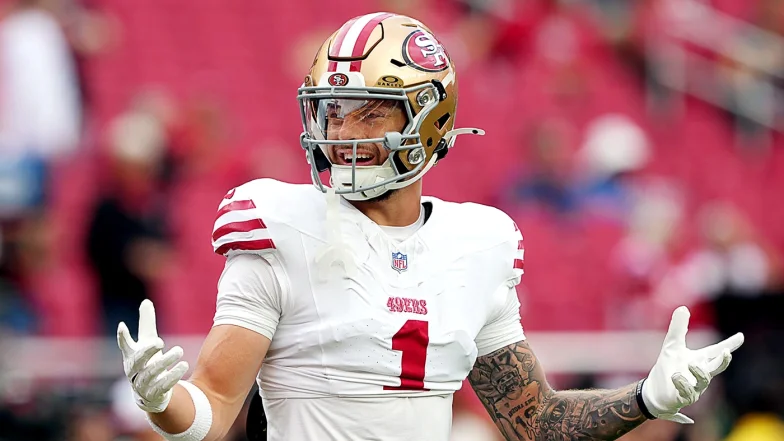
The San Francisco 49ers have barely gotten started with training camp, and they're already dealing with an injury list that is difficult to ignore. After just the first two days of practice, the team reported injuries to Vederian Lowe (ankle sprain), Andrew Farmer (back), Gracen Halton (knee bruise), Ricky Pearsall (ongoing knee issue), Jordan James (broken rib), Christian Kirk (calf strain), and Malik Mustapha (hamstring strain). That's a lot of names for a team that had only completed two training camp practices heading into Wednesday.
Naturally, the question has to be asked: Is the 49ers' new approach to player health and recovery actually working? San Francisco made a significant investment in trying to answer that question this offseason. And so far, it doesn't appear to be working.
San Francisco committed roughly $9 million toward upgrades to the team's recovery and rehabilitation facilities, with a particular emphasis on hydrotherapy. The organization also added three specialized physical therapy staff members while retaining its core training staff. The coaching staff, meanwhile, adjusted the structure of training camp to help reduce cumulative wear and tear. The 49ers are avoiding three consecutive days of practice, giving players additional opportunities to recover between workouts. On paper, it all sounds like the right approach. But then camp starts, and the injury list begins growing almost immediately.
That doesn't necessarily mean head strength and conditioning coach Dustin Perry and his staff are doing a poor job. In fact, it's important to recognize that some of these injuries are difficult, if not impossible, to prevent. A broken rib can happen during a collision, for example. So can a knee bruise. A calf strain can occur despite careful workload management. And Pearsall's knee issue isn't a new injury.
Still, the 49ers have invested heavily in their player health. When you invest millions in rehabilitation facilities and staff, expectations naturally increase. The goal isn't to eliminate injuries. That's impossible in the NFL. The goal is to reduce preventable injuries, identify problems before they become serious, manage workloads intelligently, and get players back on the field as safely and efficiently as possible.
Cue the "substation" talk. If the 49ers continue to see their injury list grow at this pace, the organization will have to take a hard look at everything, from the practice structure to offseason conditioning to the location of the practice field. And relocating the practice field doesn't appear to be something the team wants to consider at this time. But might that be something they have to look into at some point?
The 49ers have made it clear they believe they've made meaningful changes to improve player health. Now those changes have to produce results. And that's maybe the biggest question surrounding this team right now.
Are these injuries simply an unfortunate coincidence? Or are they an indication that the 49ers still haven't figured out how to keep their players healthy? It's still early. Are we overreacting? Do 49ers fans have PTSD due to injuries of seasons past?
Three days into training camp, it's far too early to answer these questions. Judging Perry and his staff based solely on this injury list would be unfair. But it's also impossible to ignore what's happening.
If the injury list shrinks over the next few weeks, perhaps these first few days will be nothing more than an unfortunate blip. If it continues to grow, however, the "substation" conversation is going to get a lot louder. And Perry and his staff will come under greater scrutiny. At that point, the 49ers may have to start asking some uncomfortable questions about whether their new approach is really doing enough. If not, then 2027 may bring even more uncomfortable questions—and decisions.
Mentioned in this article: Andrew Farmer, Gracen Halton, Jordan James, Christian Kirk, Vederian Lowe, Malik Mustapha, Ricky Pearsall
Comments