Not that long ago, San Francisco 49ers quarterback Brock Purdy was going through contract negotiations. Many weighed in on how much he was worth, and many decried how much cap space his new contract would use up.
One writer claimed Purdy is not elite. Chris Simms suggested the Niners trade Purdy. Pro Football Focus said Purdy's potential contract led to a roster purge.
Considering those the latter journalist listed—Deebo Samuel, Javon Hargrave, Maliek Collins, Kyle Juszczyk, and Leonard Floyd—I would like to point out a few things.
Samuel's production has gone down each year. Hargrave was injured, and the season after he was released, he put up three and a half sacks for the Vikings. Collins had five sacks in San Francisco and six and a half in Cleveland, hardly Aaron Donald-type production. Juszczyk re-signed. Only Floyd could be considered a loss—eight sacks for the Niners—but he had only three the following year.
And without those players, Purdy led an injury-ravaged team to seven wins versus two losses, not including a win in the playoffs.
At the time, Tua Tagovailoa had just signed a contract that averaged $53 million per year. Jordan Love signed an extension that averaged $55 million. I wrote that the market would play a large part in Purdy's negotiations, especially since Brock's numbers were better than those of the other players, and he had won more games.
Ultimately, the issue came down to what Purdy was "worth." He ended up signing close to what I predicted, but the contract was structured to be very team-friendly, as his salary cap hit will not come close to $50 million until 2028.
Recently, there has been news of the firing (or "letting go") of numerous ESPN reporters after the merger with NFL Network. Among those were Ryan Clark, an outstanding analyst, and Tom Pelissero, one of the top NFL insiders.
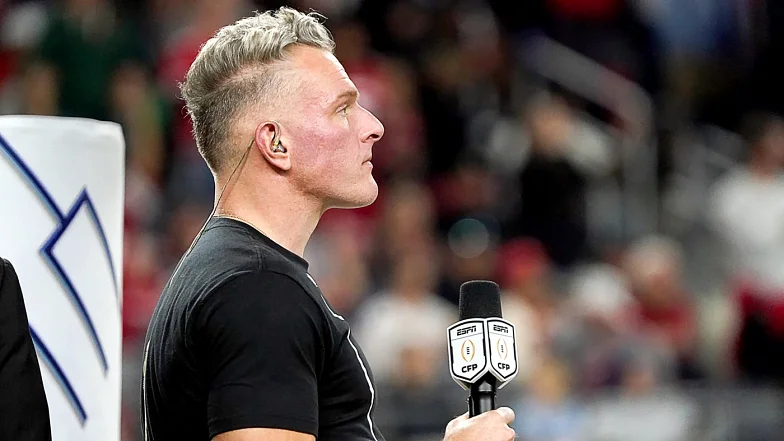
According to some, one reason was the reworked contract of Pat McAfee, a commentator and online sports personality with a large following.
His new deal is supposedly close to $60 million per year.
For context, McAfee's total compensation leading into this round of negotiations was around $30 million. Kirk Herbstreit makes roughly $18 million for his work on various shows for both college football and the NFL. Stephen A. Smith's compensation is $20 million. All-time great quarterback Tom Brady makes $37.5 million.
Herbstreit is an analyst and broadcaster, and Brady a color commentator during games, so the closest comparison is probably Smith, whose specialty is basketball but who editorializes on numerous sports. He has been with ESPN for roughly 20 years, whereas McAfee has roughly half that experience.
When it comes to the people McAfee is reporting on, star quarterback Josh Allen makes less than McAfee will, as do Joe Burrow and every other NFL player not named Patrick Mahomes.
The network might argue that McAfee has a massive audience. When you add up his 2.9 million YouTube subscribers and his followers on X and Instagram, he has about ten million people watching or reading his work.
Ryan Clark comes in at around eight million.
Ryan Clark's salary was around $2 million. Are we to believe that Pat McAfee is worth 30 times more than Clark? Or even 15 times more on his old deal?
Pelissero's salary was about $1.5 million.
Hall of Fame defender JJ Watt was on McAfee's podcast and (supposedly jokingly) asked, "Did they keep anybody, or is everybody fired to pay you? I'm trying to figure it out."
McAfee was not amused, saying, "That is not funny. We do not like that. We do not appreciate that. That is the narrative, and I'm certainly taking it on the shins."
Sixty million, and he uses the royal "we" but gets offended and is "taking it on the shins" when colleagues lost their jobs?
And this from someone who has made a reputation by being provocative.
When suggesting a pay increase of double what was already the second-highest total compensation in the business, he (and his agent) is suggesting he won't get out of bed for that measly $30 million.
But the question for so many of these contracts, whether the athletes or those who report on them, is whether the market will bear it.
The salary cap is in place so that the highest contracts don't get out of hand. And general managers have to juggle a lot of salaries to make it work.
But they do. They all field full teams with 53 on the main roster. Most all have multiple high-contract players and numerous low-money players. (The veteran minimum salary is close to what Pelissero made.)
But apparently, the market won't bear the McAfee contract, as the network had to let go of several of its best reporters to make room for a $60 million-per-year hit.
And McAfee had no problem doing that.
Over the years, numerous players reduced their salaries to help teammates. Former 49ers greats Brent Jones and Harris Barton did so.
Perhaps the most famous player to take less, much less, than he could have, is Tom Brady. Though he won seven Super Bowls, Brady was never the highest-paid quarterback in the league. In fact, when he signed with the Tampa Bay Buccaneers and led them to a Super Bowl championship, his yearly average was not even in the top ten among quarterbacks. Less than Ryan Tannehill. Less than Jacoby Brissett. Less that Derek Carr.
McAfee asked for, and got, roughly $60 million per year.
And ESPN could not afford a contract worth $2 million.
The story about these firings will soon go away. Ryan Clark is good enough—and respected enough—to get a new job and to make a good living. But it shouldn't be forgotten. McAfee should not be able to question an athlete's "outrageous" contract amounts—and he will, because often those sums are ridiculous—without having to hear about his own.
ESPN executives should be asked to justify their math and provide an accounting, the same way NFL teams must make public the contract details of all of their players.
And let's not fall into the old adage of "well, if the market can bear it . . ."
Because in this case, it couldn't.
Comments